
1 in 8 Women Have This Hormonal Condition — And Up to 70% Don't Even Know They Do
Irregular periods, weight that won't budge, unwanted facial hair, stubborn acne, thinning scalp hair, exhaustion that no amount of sleep fixes — there is one name for all of it. And one daily drink quietly rebuilding the hormone loop behind every single symptom.
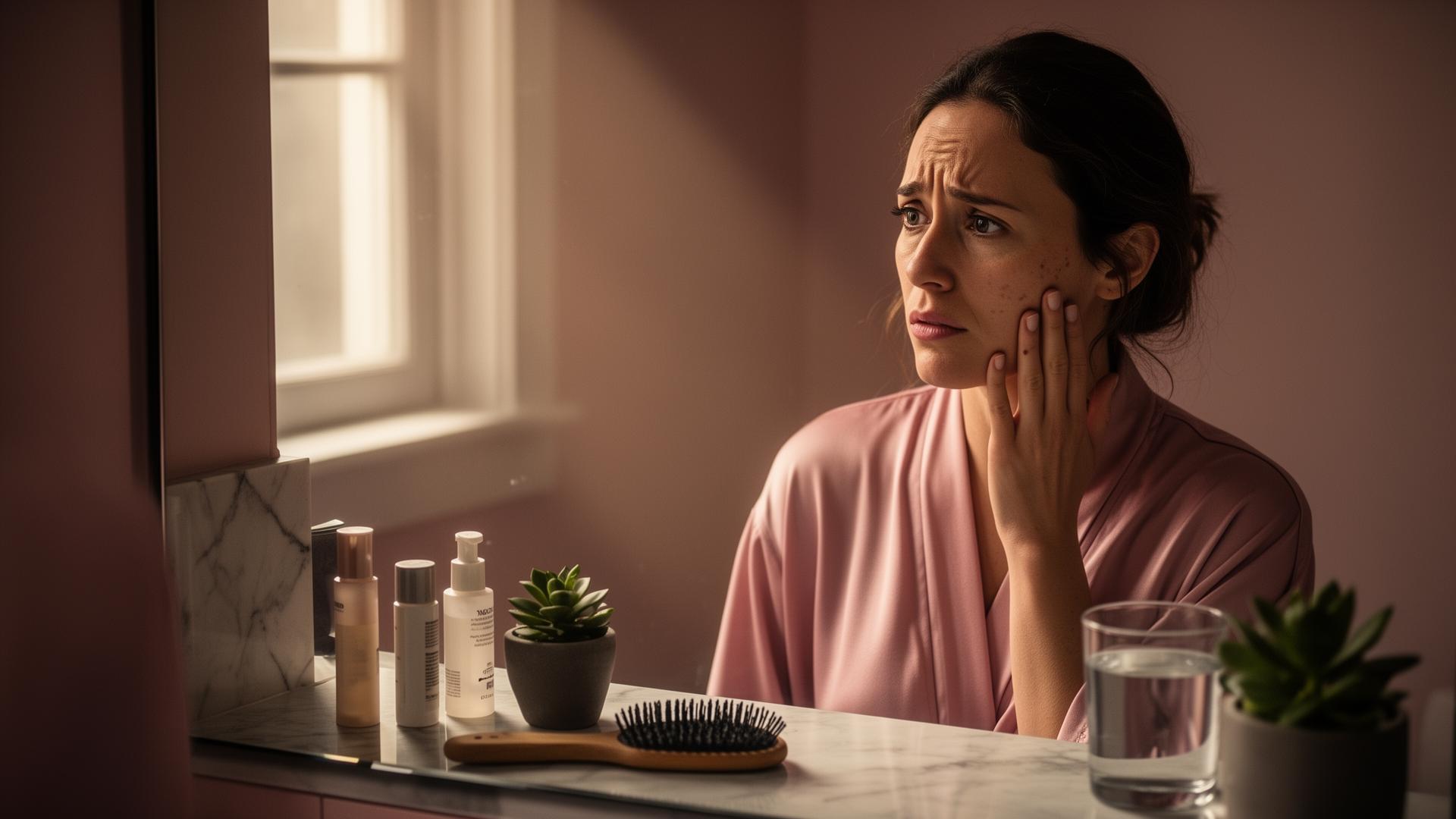
If your period shows up whenever it feels like it. If the scale won't move no matter what you eat. If you're plucking dark hairs from your chin in a lit-up mirror, breaking out along your jaw in your 30s, watching more hair come out in the shower than should be possible — you are not imagining it, you are not lazy, and you are not alone.
Globally, the best estimates now suggest that up to 1 in 8 women of reproductive age have a single hormonal condition that quietly explains every one of those symptoms at once. It is called Polycystic Ovary Syndrome — PCOS.
That works out to roughly 1 in 8 women worldwide. Around 300 million women, depending on the population studied and the diagnostic criteria used. And the number is climbing every year as researchers realize how many milder cases have been missed for decades.
Here is the part that should make every woman reading this stop scrolling: up to 70% of women who have PCOS don't know they have it. Especially when the symptoms are 'mild enough' that doctors keep waving them off as stress, age, or 'just how your body is.' And here is what nobody warns you about — the women who don't know are the ones at the highest long-term risk.
If You Have Two or More of These, Keep Reading
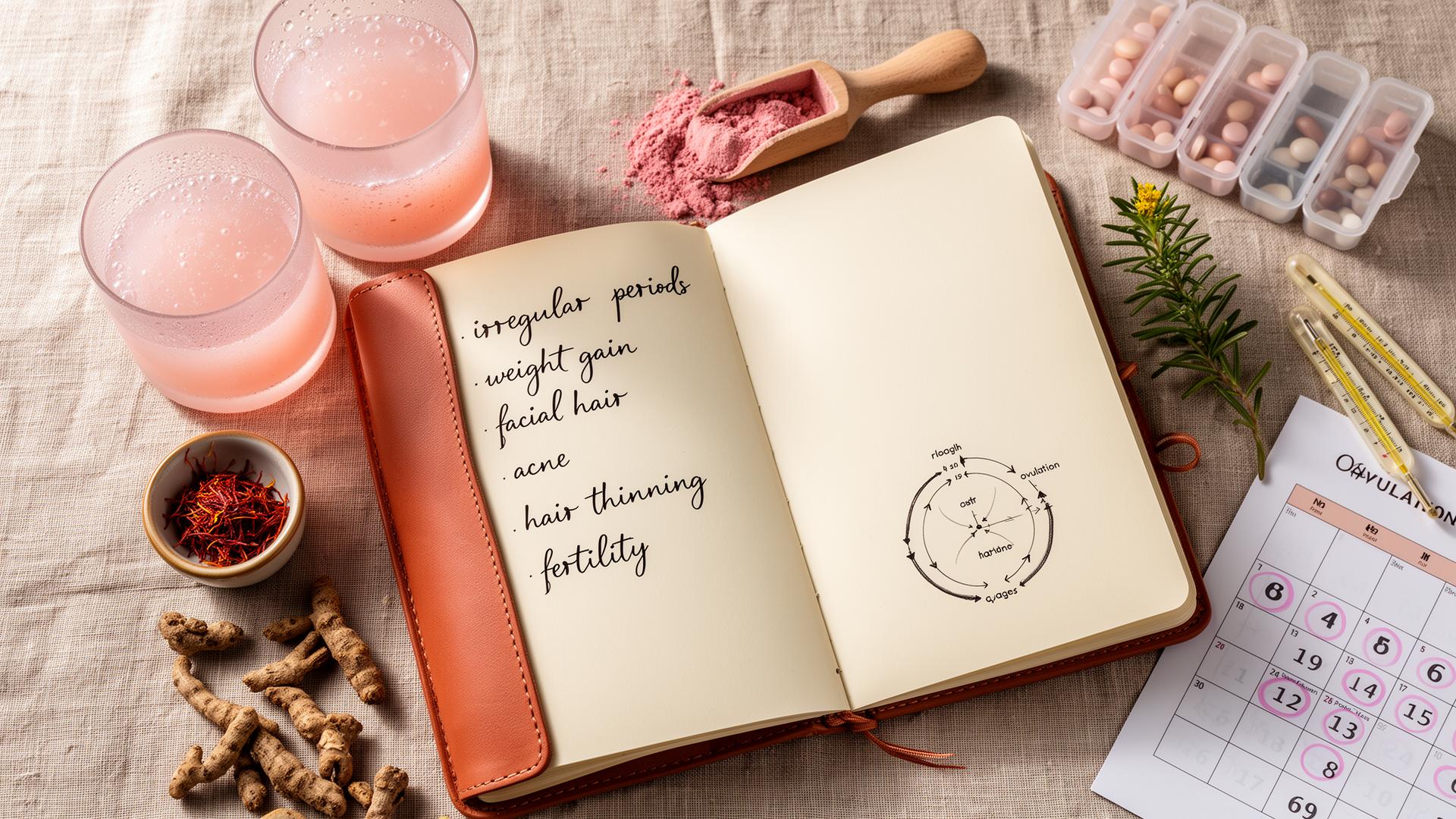
Doctors trained in functional hormonal health agree on a short list of symptoms that, when more than two show up together, almost always point to the same underlying problem:
- ✓Irregular or absent periods — cycles that show up at day 35, day 45, skip months, or have vanished entirely.
- ✓Difficulty losing weight — especially around the lower belly, no matter how clean the diet or how hard the workouts.
- ✓Excess facial or body hair — chin, jawline, upper lip, lower stomach. Dark, coarse, recurring no matter how many times you remove it.
- ✓Hormonal acne — deep, painful breakouts along the jaw and chin, often before a period that doesn't always arrive.
- ✓Thinning hair on the scalp — more hair in the shower drain, a wider part, less density at the crown.
- ✓Fertility difficulties — trying for months without success, or being told you're 'not ovulating regularly.'
- ✓Wired-but-exhausted energy — needing coffee to function, crashing at 3pm, then unable to fall asleep at night.
- ✓Mood swings and anxiety — irritability, low mood, panic-edge feelings that don't match what's actually happening in your life.
Why So Many Women Are Missed for Years
The reason this gets missed is that PCOS does not look the same in every woman. Some have heavy bleeding, some have no period at all. Some gain weight, some don't. Some have textbook ultrasound results, some have completely 'normal' scans. Some show up in labs immediately — others test fine for years while the loop quietly tightens underneath.
Doctors are trained to look for the extreme version — and to dismiss everything else as stress, age, diet, or 'just how your body is.' Stricter diagnostic criteria put the rate around 8–10%. Broader, more accurate criteria put it as high as 13–20% in some populations. That is up to 1 in 5 women — and most have never heard the word PCOS used about their body.
Most women I see have lived with these symptoms since their teens. They've been told it's stress, it's hormones settling, it's just genetics. By the time someone finally connects them to PCOS, they've been suffering for a decade — and the long-term damage has already started.
The Part Nobody Wants to Tell You — What Happens If You Ignore It
Here is what the wellness articles avoid saying out loud: PCOS is not a cosmetic problem. It is not 'just' irregular periods or 'just' acne or 'just' a few extra pounds. Untreated, the same hormonal loop that's giving you those symptoms today is actively setting up some of the most serious diseases a woman can face.
Up to 3× higher endometrial cancer risk
Every month you don't ovulate, your uterine lining keeps thickening without ever properly shedding. After years of this buildup, women with chronic anovulatory PCOS face up to **three times the risk** of endometrial cancer. This is the single most dangerous consequence of being told 'irregular periods are normal.'
Up to 4× higher risk of type 2 diabetes
PCOS is built on insulin resistance. Left untreated, that resistance hardens — and women with PCOS are up to **four times more likely** to develop type 2 diabetes by their 40s. Most are insulin resistant for years before a single lab value flags it.
Higher cardiovascular disease risk
The same insulin and androgen imbalance silently raises blood pressure, triglycerides, and arterial inflammation. Women with PCOS have meaningfully elevated rates of heart disease and stroke — decades before symptoms appear.
The leading cause of infertility in women
PCOS is the **#1 cause of ovulatory infertility worldwide.** Every cycle without ovulation is a cycle of declining egg quality. Women who wait until they're trying to conceive are often shocked to learn the damage was done in their 20s.
3× higher rates of anxiety and depression
This is not 'in your head' — it is in your hormones. Chronic cortisol elevation, androgen excess, and insulin crashes are clinically linked to anxiety, depression, and disordered eating. Untreated PCOS makes every mental-health condition harder to manage.
Non-alcoholic fatty liver disease
Insulin resistance from PCOS drives fat storage in the liver — even in women who don't drink and aren't 'overweight.' This is increasingly being detected in women in their 30s who were never warned it was a risk.
What's Actually Broken Inside Your Body
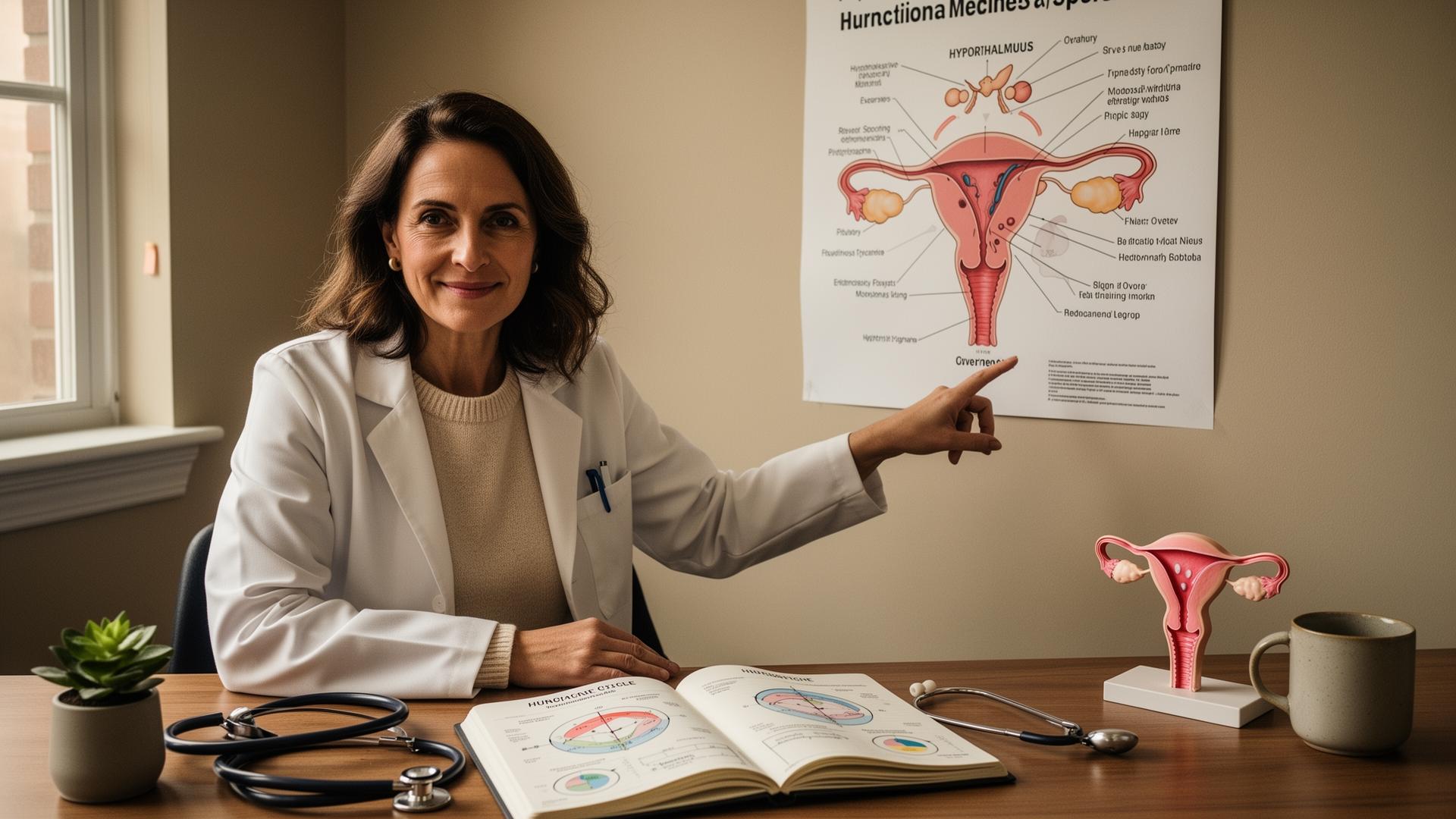
Forget what the name suggests. PCOS is not really about cysts — most women with PCOS do not have visible cysts at all. It is a breakdown in three signals that should be working together every single day:
Insulin Resistance
Your cells stop responding to insulin properly. Your body pumps out more to compensate. High insulin is a direct signal to your ovaries to produce extra androgens — and that is what drives the facial hair, the cystic acne, the scalp thinning, and the belly weight that refuses to move no matter what you eat.
Stress Hormone Overload
Cortisol stays elevated from everyday stress, poor sleep, under-eating, and over-training. That elevation jams the brain's message to the ovaries — the hypothalamic signal that triggers ovulation gets quieter and quieter until your period delays, skips, or stops appearing entirely.
FSH / LH Out of Balance
The two hormones your brain uses to trigger ovulation fall out of rhythm. LH stays elevated, FSH stays suppressed. Your ovaries stop responding when the signal arrives. No ovulation means no real period — and the cycle of symptoms keeps repeating, month after month after month.
These three are a loop — not a list. Insulin drives androgens. Androgens block ovulation. No ovulation means cortisol stays elevated. Elevated cortisol worsens insulin resistance. The loop tightens with every cycle — and you feel it as exhaustion, weight that won't move, cycles that won't show, skin that won't clear, and a face that doesn't quite look like yours anymore.
This is why fixing one piece at a time has never worked. The loop just routes around it. Lower androgens with spironolactone — cortisol and insulin keep the loop running. Lower insulin with metformin alone — cortisol and the brain signal stay broken. Mask the cycle with birth control — every other link keeps tightening underneath.
Why Most 'Solutions' Make You Feel Like It's Your Fault
Here is the trap most women fall into. They get told to just go on birth control — which masks the missing period but does nothing to the underlying loop, and often makes insulin resistance worse over time. They're prescribed metformin — which touches insulin but ignores cortisol and the brain signal entirely. They're told to lose weight — by a doctor who didn't mention that PCOS is the reason the weight won't come off in the first place.
Then they try everything in the wellness world. Cutting dairy, gluten, sugar. Intermittent fasting. Seed cycling. Some of it helps a little. None of it touches all three links at once — so the loop always comes back.
And the supplement aisle is no better. Most products pick one ingredient and one mechanism — inositol alone, or ashwagandha alone, or magnesium alone, at doses lower than what published research actually uses. That is why women try something for two weeks, see partial results, give up, and quietly conclude it must be them — not because the ingredients don't work, but because they were never working together at the dose that matters.
The 6-Mechanism Daily Drink Rebuilding the Loop
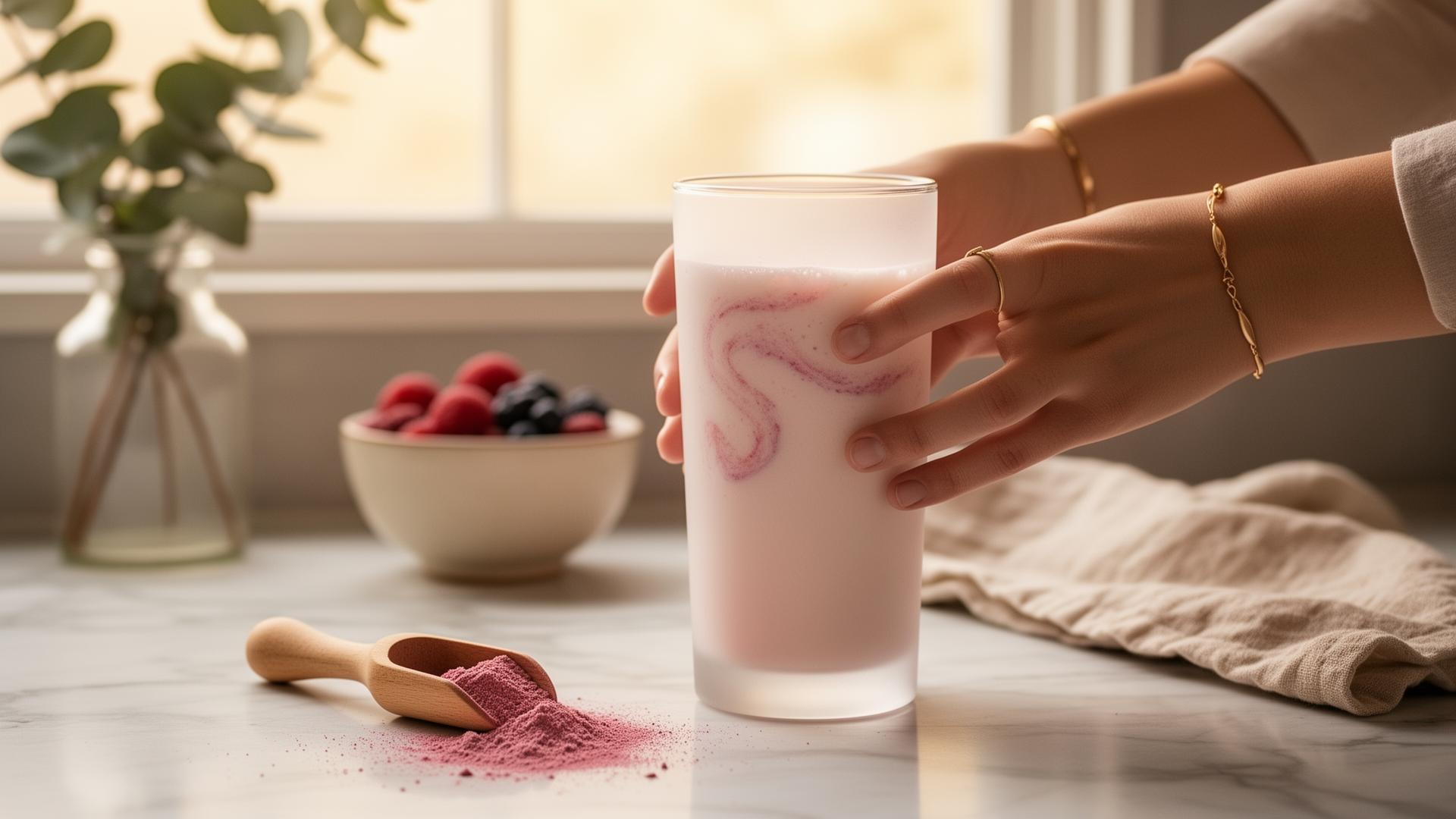
Novelle Super Balance Drink Mix was built around exactly this problem — by a team of functional medicine practitioners who watched their patients waste years and thousands of dollars cycling through single-mechanism supplements. Not one ingredient. Six. Each one dosed at the level published research actually uses — not the underdosed sprinkle most supplements get away with on the label.
And critically, all six are in one daily scoop you drink in water — not eight bottles on your counter that you forget by day four. Compliance is the silent killer of every PCOS protocol. The reason most women never recover is not that the science doesn't work — it is that no one can stick to eight pills, three powders, and two tinctures for the six to eight weeks the loop actually needs.
Myo-Inositol — 2,000 mg
The most studied natural compound for restoring insulin sensitivity in women with PCOS. Multiple randomized trials show **2,000 mg/day for 3 months** restores ovulation in up to 70% of women. Drops androgen production at the source — the same source driving the facial hair, the acne, and the weight that won't budge.
Rhodiola Rosea + KSM-66 Ashwagandha
Two of the most validated adaptogens in clinical literature for bringing cortisol down. KSM-66 ashwagandha has documented **20–30% reductions in salivary cortisol** in published trials. When cortisol drops, the brain finally gets to send the ovulation signal cleanly again.
SRI-81 Discovery
Modulates estrogen receptors and rebalances the FSH-to-LH ratio so your ovaries can respond when the brain calls. This is the step almost every other PCOS supplement skips entirely — and the reason their results stall at 'a little better.'
Saffron Extract
Clinically shown to support serotonin at a level comparable to first-line SSRIs in head-to-head trials. This is the missing piece for the mood crashes, the anxiety, and the irritability that almost every woman with PCOS knows too well — and that quietly keep cortisol elevated.
Magnesium Malate
Calms the nervous system out of permanent survival mode and supports the glucose metabolism pathway. Deeper sleep, fewer wired-but-tired nights, less of the buzz that keeps cortisol stuck high all day long.
Drink Mix, Not Capsules
Capsules lose 30–50% of active potency surviving stomach acid — and most women forget them by day four. A daily drink absorbs faster, delivers more of the active dose, and actually becomes a morning habit you keep. Compliance is the whole game.
Why This Combination Specifically Works When Single Ingredients Fail
There is a reason functional medicine practitioners stopped recommending single-ingredient protocols years ago. The hormonal loop has redundant feedback paths — if you only lower insulin, cortisol picks up the slack and keeps androgens elevated. If you only lower cortisol, insulin keeps the ovaries overproducing testosterone. If you only support the brain signal, the ovaries still can't respond because androgens are blocking them.
Super Balance was specifically engineered so that each ingredient covers what the others can't. Myo-inositol takes insulin offline. Rhodiola and KSM-66 take cortisol offline. SRI-81 reopens the FSH/LH pathway. Saffron and magnesium calm the nervous system feeding the loop. All six firing at once is the only configuration that actually resets the loop instead of just temporarily quieting one symptom.
What Most Women Notice, And When
- Weeks 1–2
The buzz quiets first
Sleep gets deeper. The 3pm crash softens. The wired-but-exhausted feeling most women have lived with for years finally turns down. Mornings stop feeling like an emergency.
- Weeks 3–4
Cravings drop, skin starts shifting
Insulin sensitivity improves measurably. Sugar cravings weaken. Jawline breakouts start fading as androgen production comes down. Energy stabilizes through the afternoon.
- Weeks 5–6
Weight starts moving, hair loss slows
The stubborn belly weight finally responds to the same food and movement that did nothing before. Shower drain has noticeably less hair. Facial hair starts growing back finer and slower.
- Weeks 6–8
The cycle comes back
For most women, this is when the real period returns — not a withdrawal bleed, an ovulatory cycle. The lining sheds the way it was designed to. The loop has reset. The conversation is back. **And the long-term risk starts dropping with it.**
What Happens If You Wait Another Year
Be honest with yourself for a second. You have probably already waited. Six months ago you noticed the symptoms getting worse. A year ago you thought about doing something. Two years ago you mentioned it to a doctor who waved you off.
Another year of waiting means another year of the lining thickening without shedding. Another year of insulin resistance hardening. Another year of egg quality declining if you ever want to have children. Another year of looking in the mirror and feeling like your body is becoming someone you don't recognize.
And the cruelest part: the longer you wait, the longer the recovery takes. Women who address PCOS in their 20s often see their cycle return within six to eight weeks. Women who waited until their late 30s often need three to six months — because the loop has been tightening for that much longer.
If You Recognize Yourself in This Article — This Is the Daily Drink Built For You
Novelle Super Balance combines all six clinically dosed mechanisms — myo-inositol, rhodiola, KSM-66 ashwagandha, SRI-81, saffron, and magnesium malate — into one daily drink. One scoop in water, once a day. Designed for the 1 in 8 women whose symptoms have a name nobody told them — and a long-term risk profile nobody warned them about.
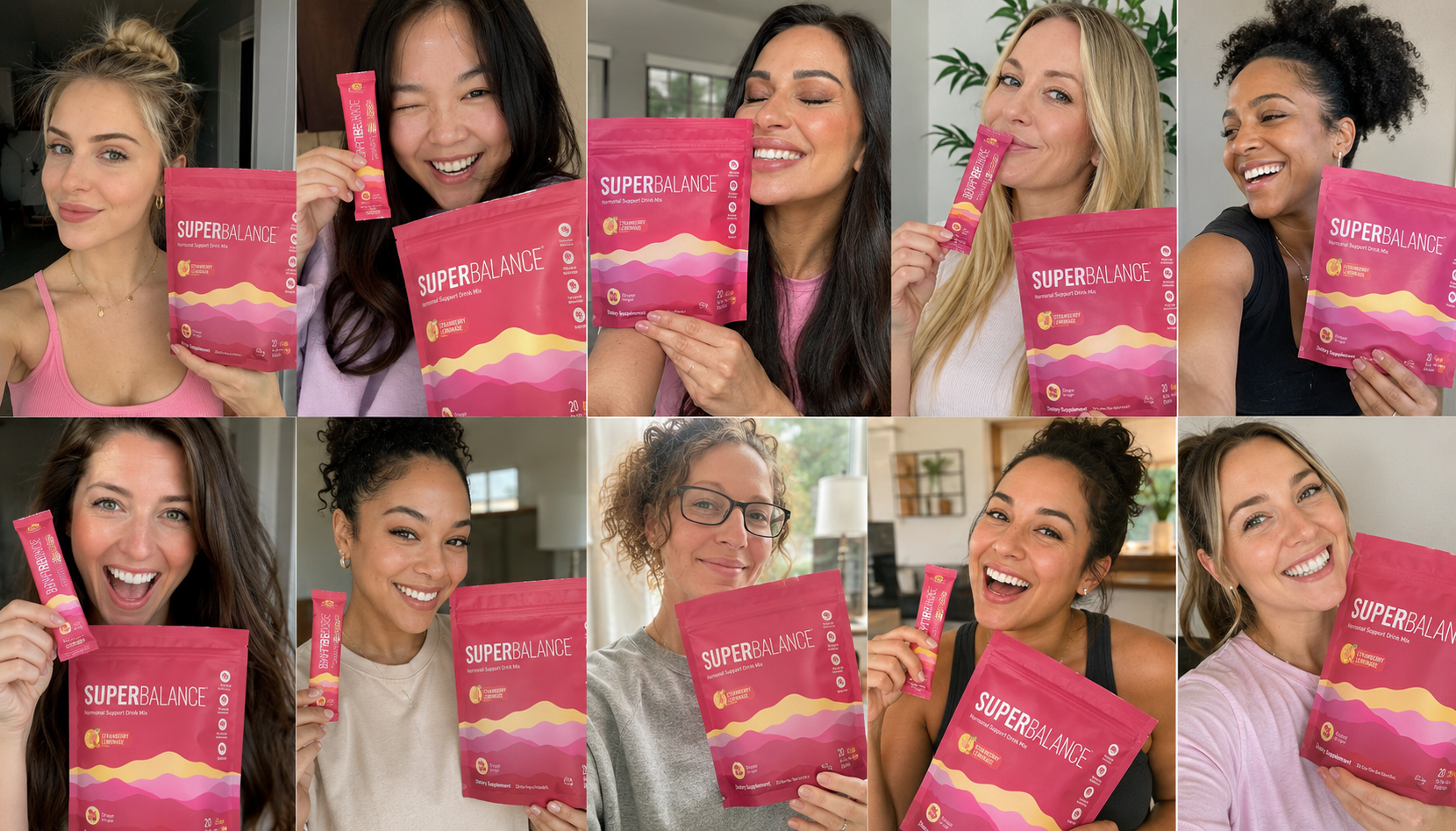
What's inside
- ✓Myo-inositol at 2,000 mg to restore insulin sensitivity and lower androgens at the source
- ✓Rhodiola rosea and KSM-66 ashwagandha to bring cortisol down and restart the ovulation signal
- ✓SRI-81 to rebalance FSH and LH so your ovaries respond when the brain calls
- ✓Saffron extract for serotonin support and the mood crashes that come with PCOS
- ✓Magnesium malate to calm the nervous system out of permanent survival mode
- ✓Drink format — faster absorption than capsules, and a habit you actually keep every morning
- ✓Lowers the long-term risk of endometrial cancer, type 2 diabetes, and infertility by restoring ovulation
Check Availability — Super Balance Drink Mix"I'd been told for years it was stress, it was my genetics, it was just how my body was. Eight weeks on Super Balance my period came back on its own, my skin cleared, and the weight finally moved. I cried the first time I saw it. I wish someone had told me ten years ago."
Click above to check current availability
Risk-free for 60 days
90-Day Money-Back Guarantee — Try It Risk-Free for a Full Cycle
If you recognized yourself in even two of those symptoms, please do not let another year pass. PCOS does not get better on its own — it compounds. But the loop behind it is fixable, and the science on how to fix it is no longer a mystery. Your body has been asking for help for a long time. This is the answer it has been waiting for.