
This Endocrinologist Found Why 1 in 10 Women With PCOS Never Actually Feel Better — And It Has Nothing to Do With Your Diet
Dr. Amara Osei is the first researcher to identify the hidden hormonal feedback loop that traps women in fatigue, irregular cycles, acne, and weight gain — no matter how hard they try.

If you've tried eating clean, cutting sugar, taking birth control, trying metformin, and every 'hormone-balancing' supplement on the market — only to still feel exhausted, broken out, and out of sync with your own body — you're not failing. You're fighting something you don't fully understand yet.
And you're not alone. Polycystic Ovary Syndrome — PCOS — affects roughly 1 in 10 women of reproductive age. It is the most common endocrine disorder in women under 45, and yet it remains one of the most consistently misdiagnosed, mistreated, and misunderstood conditions in modern medicine. Most women are told it is 'just hormones' and handed a prescription for birth control, metformin, or spironolactone. Some feel better for a while. Most don't.
Leading endocrinologist Dr. Amara Osei, who has spent the last fourteen years running a women's metabolic health clinic in Boston, recently published research that finally explains why so many women never find relief. The answer isn't another supplement, a new diet, or more willpower. It's a feedback loop — three interconnected systems that no single treatment was ever designed to address at once.
What's Actually Happening Inside Your Body Right Now
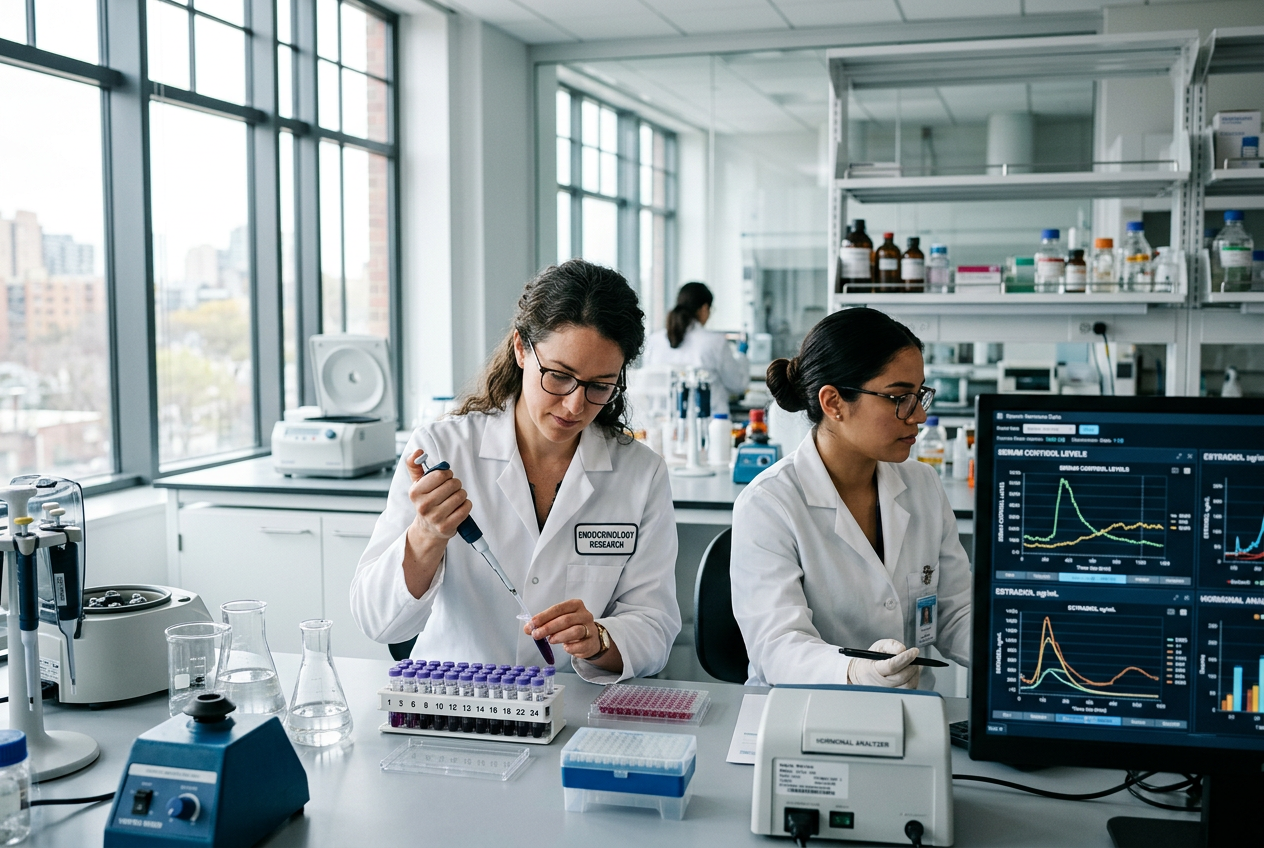
Women with PCOS don't have a single hormone problem. They have three overlapping problems that feed each other — and attacking just one of them is precisely why every treatment eventually fails. Birth control quiets the symptoms by overriding ovulation; metformin nudges insulin sensitivity. Neither fixes the loop. The moment you stop the medication, the loop spins back up exactly where it left off.
1. The Cortisol Driver
Chronic stress — the kind baked into modern life — causes your adrenal glands to flood your body with cortisol. This isn't about being anxious or 'not relaxing enough.' It is a physiological state your body enters and then can't easily leave. Persistently elevated cortisol suppresses ovulation directly by interfering with GnRH signaling from the hypothalamus, and it sets up the next problem by promoting insulin resistance in peripheral tissue.
2. The Insulin Resistance Spiral
Elevated cortisol drives insulin resistance — your cells stop responding to insulin efficiently. Your pancreas compensates by producing more. This excess insulin signals the theca cells of the ovaries to produce androgens — male hormones like testosterone and DHEA — at higher-than-normal levels. The result is the classic visible PCOS picture: cystic acne, hair changes, abdominal weight gain, and irregular cycles.
3. The Androgen Amplifier
Excess androgens then suppress the normal hormonal signals that trigger ovulation. Without regular ovulation, estrogen and progesterone become imbalanced. That imbalance worsens mood, energy, sleep quality, and systemic inflammation — which feeds stress, which feeds cortisol, which restarts the entire cycle. This is the loop Dr. Osei mapped: three systems, each making the others worse, no entry point if you're only targeting one.
Women with PCOS don't have a willpower problem or a diet problem. They have a hormonal feedback loop that no single treatment was ever designed to break — because until now, nobody was looking at all three drivers at once.
The 12 Symptoms Nobody Connects
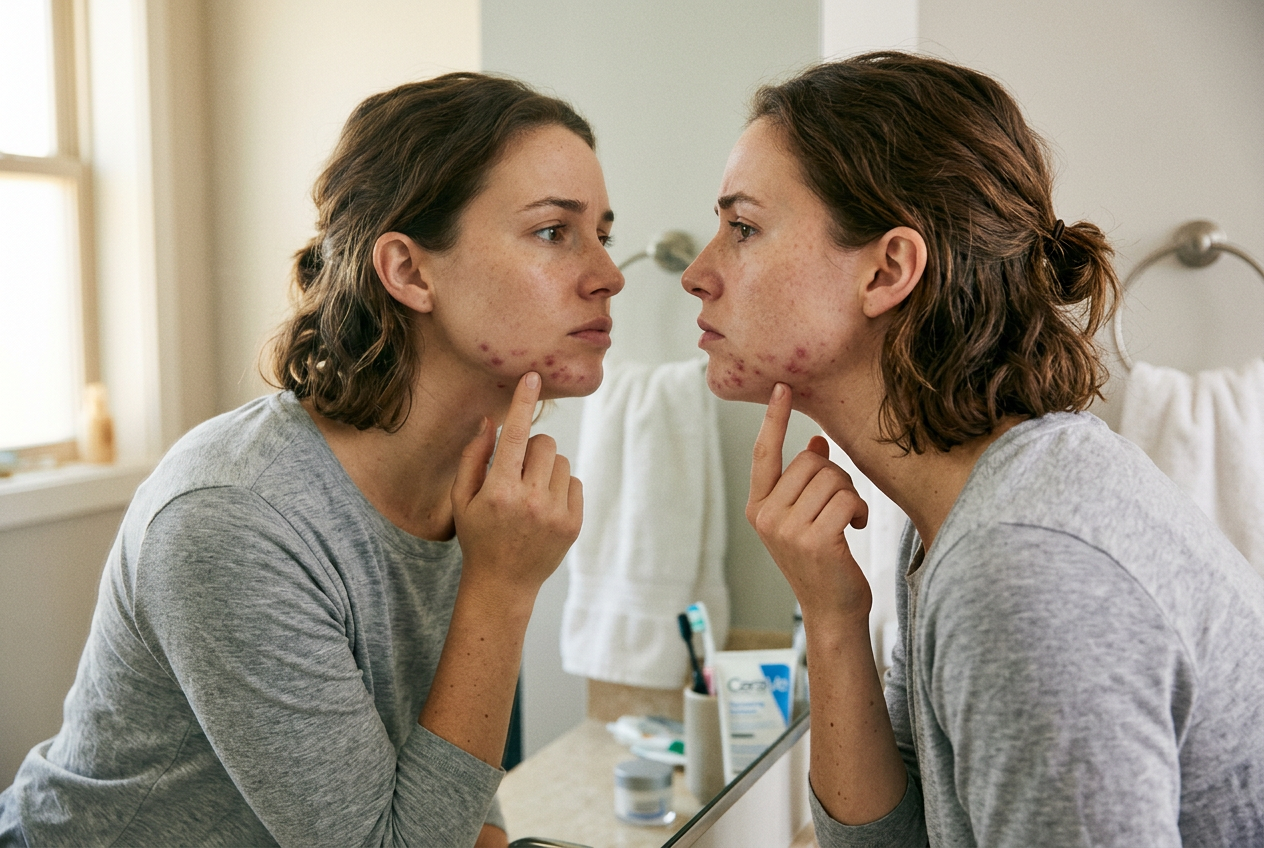
PCOS doesn't look the same in every woman. Some have severe acne with perfectly regular periods. Others miss periods for months but have clear skin. The constellation of symptoms depends on which part of the feedback loop is currently loudest. Here are the twelve most common — and the underlying driver behind each.
Irregular or Missing Periods
When the cortisol–insulin loop suppresses ovulation, your cycle becomes erratic. You may go weeks, months, or get a period every 2–3 months with no predictability.
Hormonal Cystic Acne
Excess androgens overstimulate sebaceous glands, causing deep cystic breakouts along the jaw, chin, and cheeks that no topical product can fully clear.
Stubborn Abdominal Weight
Insulin resistance signals your body to store fat preferentially around the abdomen, even when your caloric intake hasn't changed at all.
Crushing Mid-Day Fatigue
Blood sugar swings combined with poor sleep architecture leave you needing caffeine by 10am and a nap by 3pm — regardless of how long you slept.
Scalp Thinning + New Growth
Androgens both miniaturize scalp follicles and stimulate terminal hair on the chin, upper lip, and abdomen. Two symptoms, one root cause.
Brain Fog & Anxiety Waves
Disordered cortisol curves wreak havoc on neurotransmitter balance. Mornings feel impossible; evenings buzz with anxiety you can't trace.
If three or more of these symptoms feel uncomfortably familiar, the question isn't whether you have a hormone imbalance. It is which part of the loop is currently loudest in your body — and whether your current protocol is even addressing it.
How the Loop Forms — A Decade in Four Steps

- Stage 01 · Late teens
Cycles get slightly irregular
Easy to brush off as 'stress' or 'birth control settling in.' Acne and fatigue start. No diagnosis offered.
- Stage 02 · Mid-twenties
Weight stops responding to effort
Workouts and diets that worked at 22 stop working at 26. Insulin resistance is now established but invisible on standard labs.
- Stage 03 · Late twenties
The first 'maybe PCOS' conversation
An ultrasound or a borderline testosterone reading. Birth control is prescribed. Symptoms quiet but don't resolve.
- Stage 04 · Mid-thirties
The loop is fully entrenched
Coming off birth control reveals every symptom at once — often worse than before. This is when most women come to Dr. Osei.
Why Standard Treatments Keep Failing
The protocols offered to most women — combined oral contraceptives, metformin, spironolactone — were developed in eras when PCOS was understood as either a reproductive disorder or a metabolic one. Each medication targets a single node of the loop and masks the symptoms that node produces. None of them dismantle the loop itself.
What Actually Works (And What Doesn't)
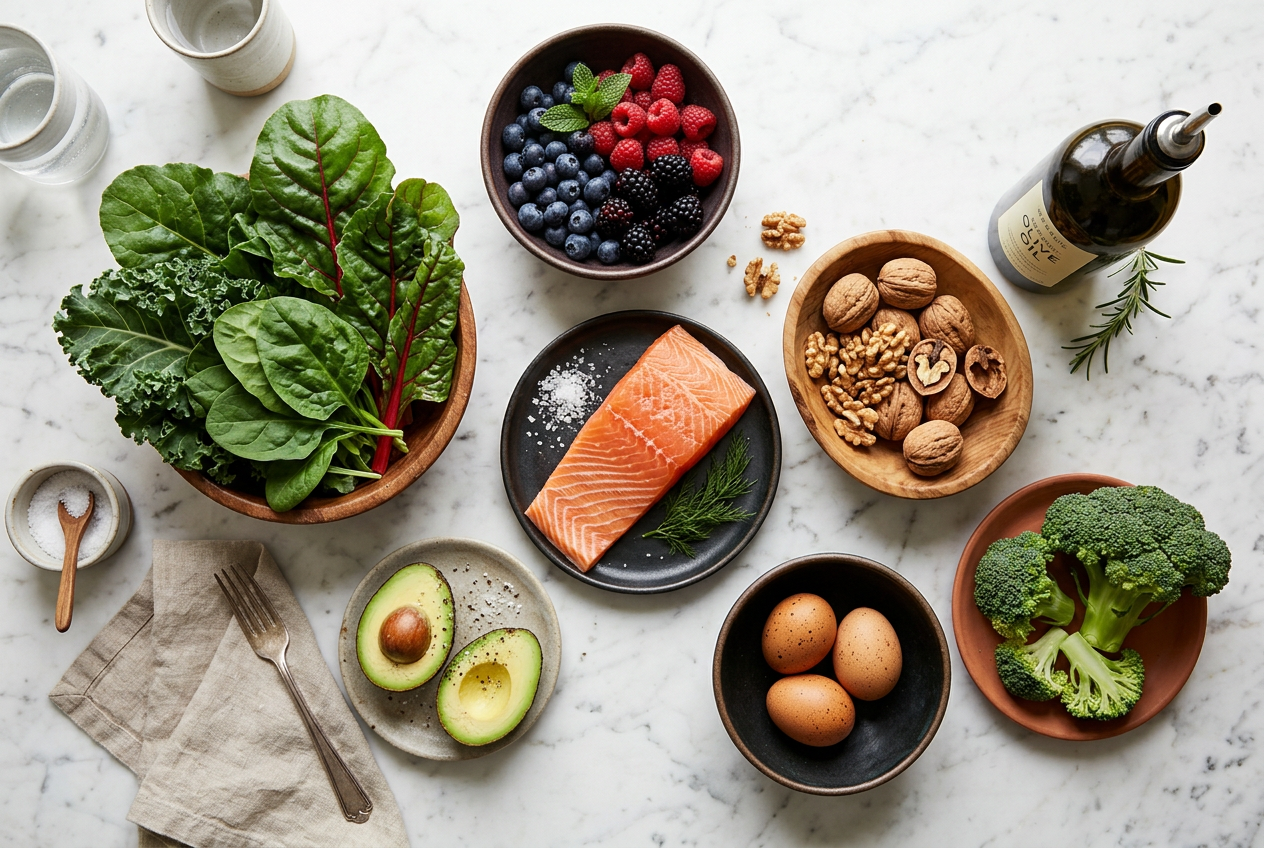
- ✓A protein-forward breakfast (30–40g) within an hour of waking — flattens the cortisol-glucose curve for the entire day.
- ✓20 minutes of direct morning daylight — calibrates the cortisol rhythm at its source.
- ✓Resistance training 2–3x weekly — the single most effective non-pharmacological intervention for insulin sensitivity in women.
- ✓Magnesium glycinate and inositol — the two micronutrients with the strongest RCT evidence in PCOS.
- ✓A hard 10pm screen cut-off — restores the late-night cortisol dip required for repair sleep.
What doesn't work: 16:8 intermittent fasting in women with established cortisol dysregulation (it amplifies the loop), keto diets sustained for more than 8 weeks (they suppress T3), and any protocol that promises results in under 30 days. The loop took years to form. It takes a season — not a week — to dismantle.
The women who get better aren't the ones who try the hardest. They're the ones who finally stop fighting the wrong fight.
What to Do This Week
- ✓Request a full hormone panel: fasting insulin, HbA1c, free and total testosterone, DHEA-S, SHBG, AM cortisol, and a thyroid panel including reverse T3.
- ✓Track one cycle (or four weeks if you don't cycle) — symptoms, sleep, energy, mood — on paper. Patterns matter more than any single data point.
- ✓Move breakfast earlier and make it protein-led. This single change moves more biomarkers in 14 days than any supplement on the market.
A Formula Designed to Address All Three Drivers of the PCOS Loop
Most approaches target only one part of the loop. This daily drink mix was developed to support cortisol balance, insulin sensitivity, and healthy androgen levels simultaneously — the exact combination Dr. Osei's research identified as the breakthrough.
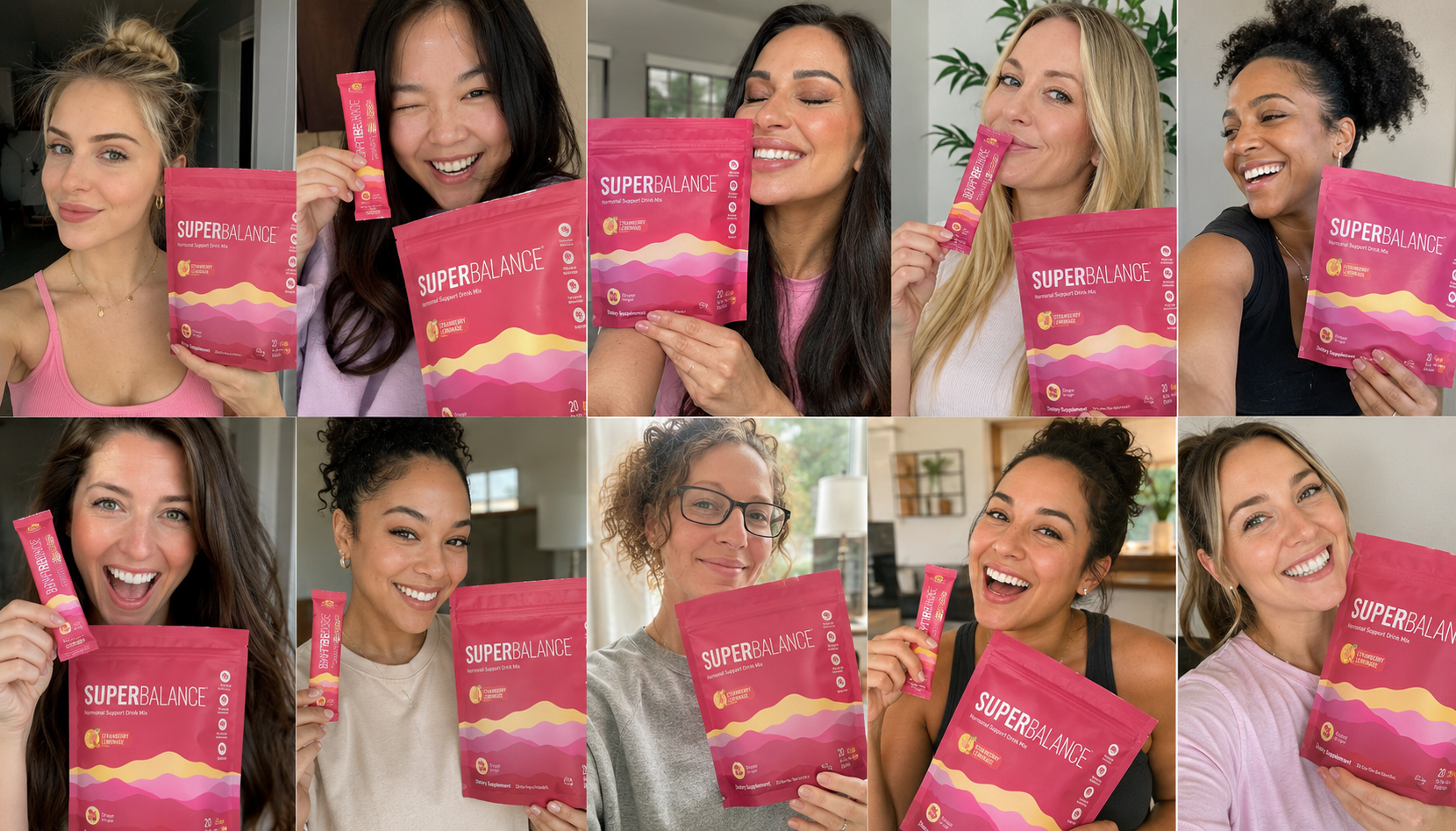
What's inside
- ✓Adaptogenic herbs to support healthy cortisol rhythms throughout the day
- ✓Inositol and chromium to promote healthy insulin sensitivity
- ✓Zinc and saw palmetto to support healthy androgen balance
- ✓One scoop daily in water or a smoothie — no pills, no timing charts
Check Availability — Super Balance Drink Mix"After four months, my cycles regulated for the first time since college. My acne cleared. I finally understood what 'feeling normal' meant."
Click above to check current availability
Risk-free for 60 days
90-Day Money-Back Guarantee — Try It Risk-Free
PCOS is not a life sentence. It is a loop. And loops, once you can see all three drivers at once, can be unwound.